
For my art history class, we were asked to create something inspired by the week’s Modernism reading on Fauvism, German Expressionism, Post-Expressionism, Cubism, Suprematism, Dada, and other movements from 1900-1920. I chose Matisse’s Bonheur de Vivre (Joy of Life), 1906, not just because it was easier for me, but because I’ve always loved Matisse—in the same way I love van Gogh, which might sound typical, but so what?
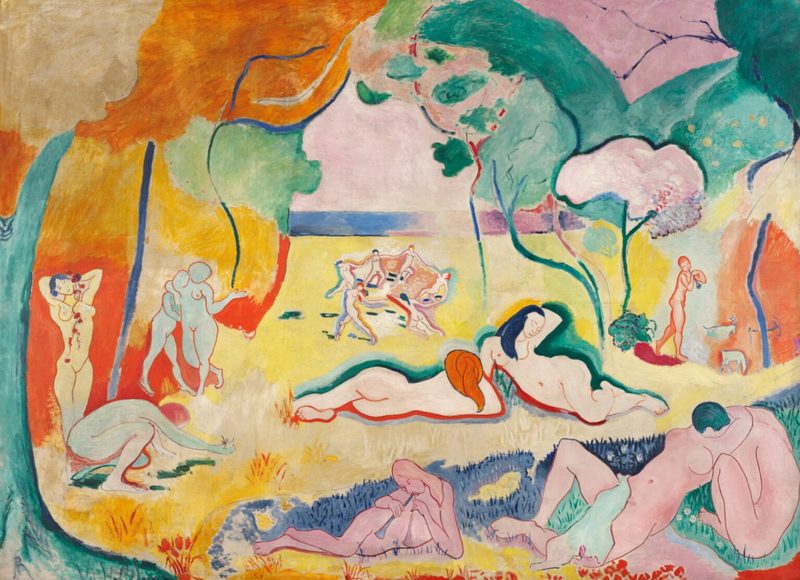
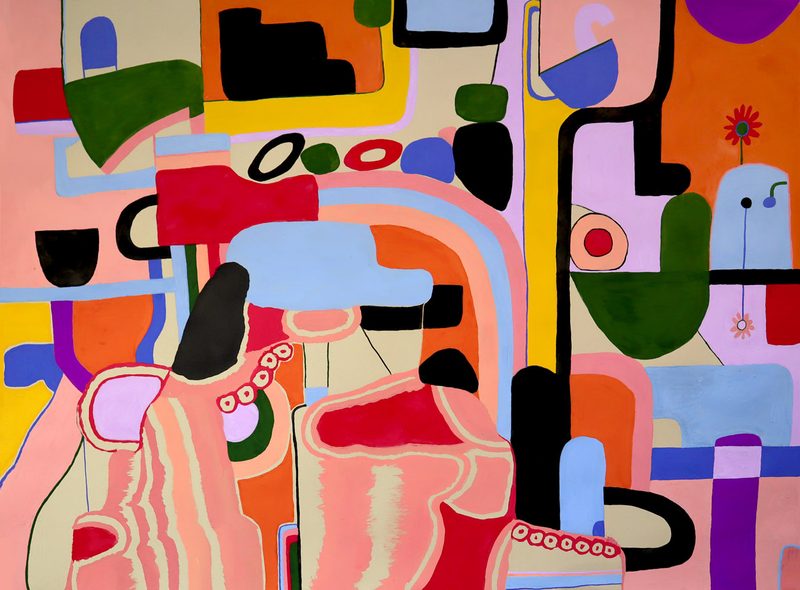
While Bonheur de Vivre is an oil painting, I created a small watercolor and colored pencil piece to interpret his sense of color and form. It’s certainly not a copy, but I think it has the same “vibe,” anyway. I call mine Life & Joy – After Matisse.
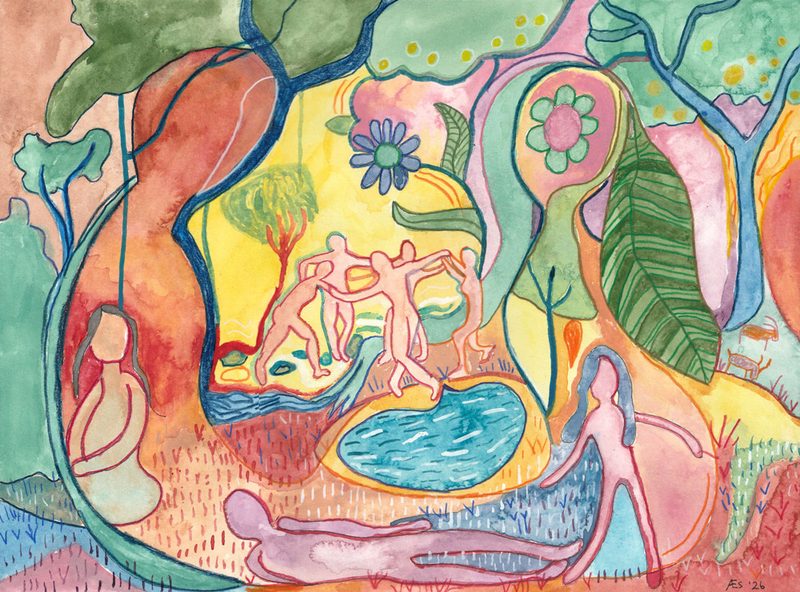
Not too terrible. It was a “quickie.”
We don’t usually have to make art in this class, but this was for a discussion about that era’s work. I was actually torn between this Matisse painting and a Malevich’s work, which are complete opposites. Malevich’s work was considered Suprematism. The word reminded me of white supremacy, and the painting called White on White was yet another misstep into those ideas. But Suprematism wasn’t about that at all. It’s about spirituality and simplicity, which flew in the face of the art of that time.
While it does need some context, it wasn’t about needing any metaphorical explanations. Using White on White as an example, the art is exactly what it is: a white square on another white square.
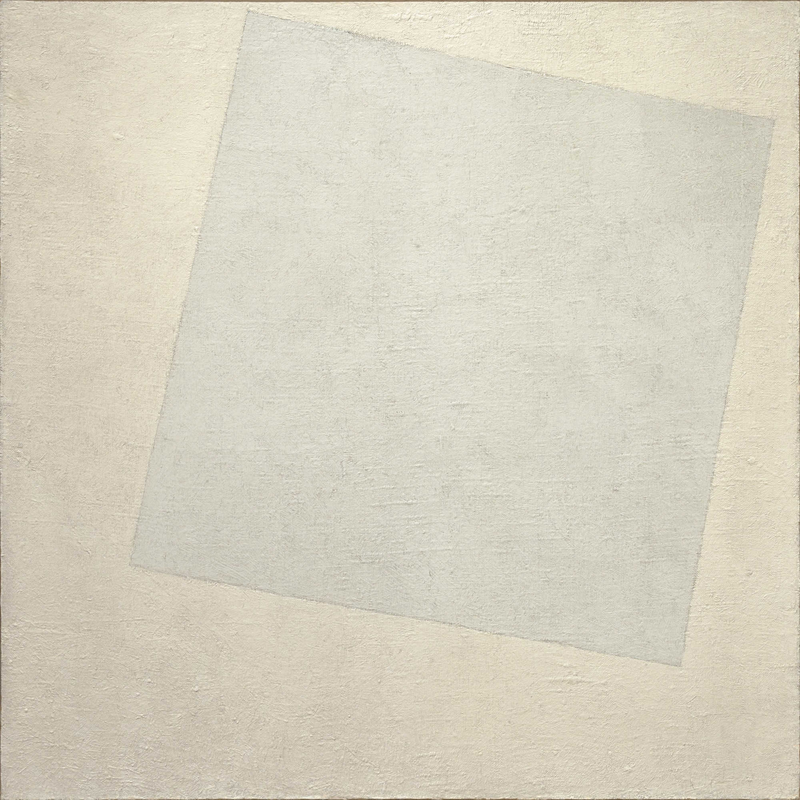
Malevich (1879-1935) actually coined Suprematism himself. The name comes from the idea of “supremacy of pure feeling.” He believed pure abstract form and feeling were superior to depicting recognizable objects or subject matter, not just “abstracting” reality. This really is a purist’s view, and I loved reading about it since it was how I saw abstract art as a younger person, and maybe still do.
This is where I really began in terms of art. I loved abstract art first and foremost, and I mean from the time I was five or six, staring at posters in the waiting room of my mom’s psychiatrist’s office. I’d wait in there, looking at those Highlights magazines, playing with Lincoln Logs, or whatever else was there, but I’d mostly stare, admiring the artwork on the posters the doctor displayed in his waiting room: Paul Jenkins (1923-2012), Paul Klee (1874-1940), and Kandinsky (1866-1944).
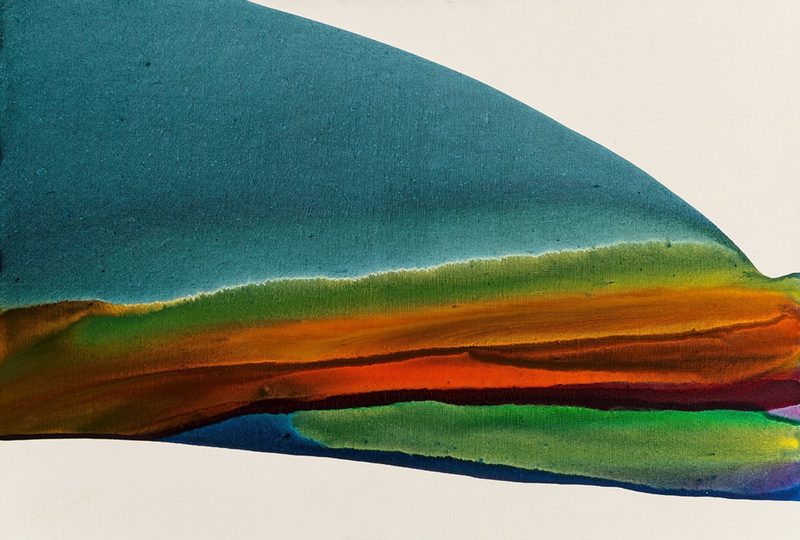
I was fascinated with the “brush strokes” of Jenkins’ work. It was the first time I thought about creating paintings myself, and not in crayon and pencil. It wasn’t until decades later when I learned that he didn’t even use brushes. I tried painting like this as a pre-teen and could never duplicate that “look” because I didn’t realize he was pouring and tilting the paint onto the surface. He started this a few years after Pollock was dripping paint on the floor to make his drip paintings, but that was a little different, and I’ve never been a big fan of Pollock’s art in particular. I realize how innovative it was at the time, but the look of those paintings has never moved me in the simpler way Jenkin’s work did. But I didn’t know anything about art history when I was a little kid, and didn’t care either. It wouldn’t be until I was 16, when I could drive myself to the Norton Simon Museum to see a show of Kandinsky and Lyonel Feininger (1871–1956). I was hooked from that day forward and did a years-long, careful observation study of abstract art from a totally naïve point of view.
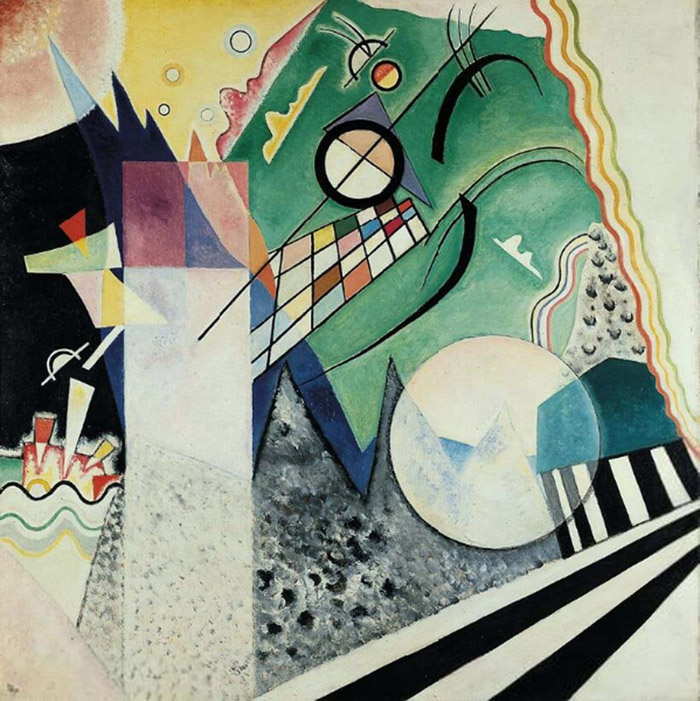
I forgot to mention that this very Kandinsky painting hung over my bed as a poster for many years when I was young.
I never thought of Feininger as a purely abstract artist. His work is more representational and expressionistic, but I saw many of his drawings and loved them. Klee can be a similar animal in that way, but that was all I remember that show at the Norton Simon. And those Feininger drawings went well with the Kandinsky paintings.
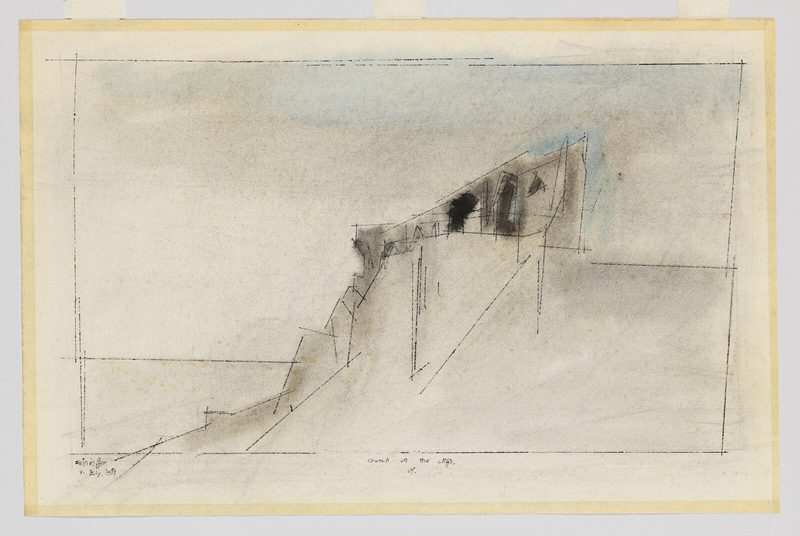
Another interesting tidbit about Paul Klee is that decades went by before I realized how deeply influenced I was by him.
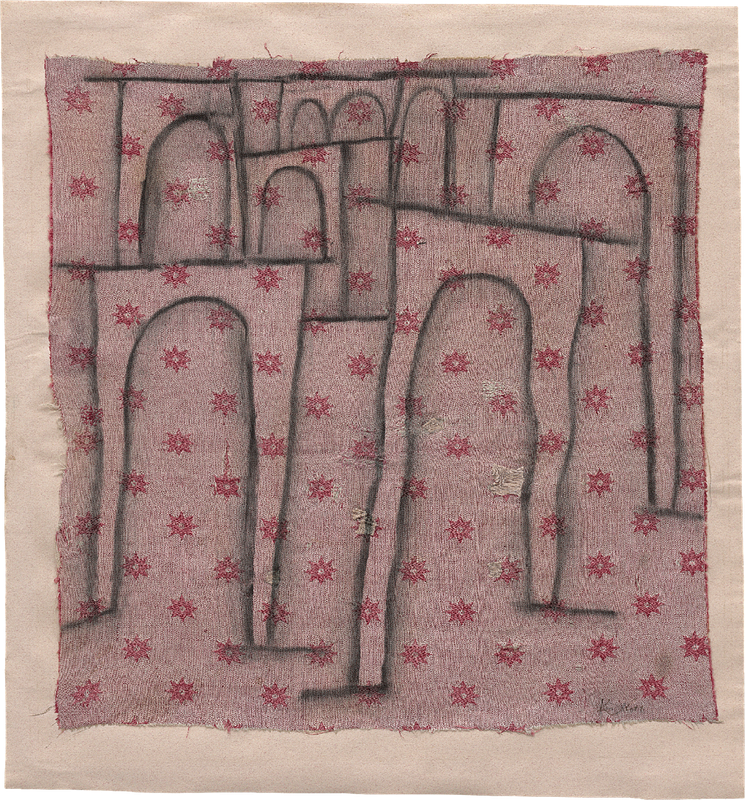
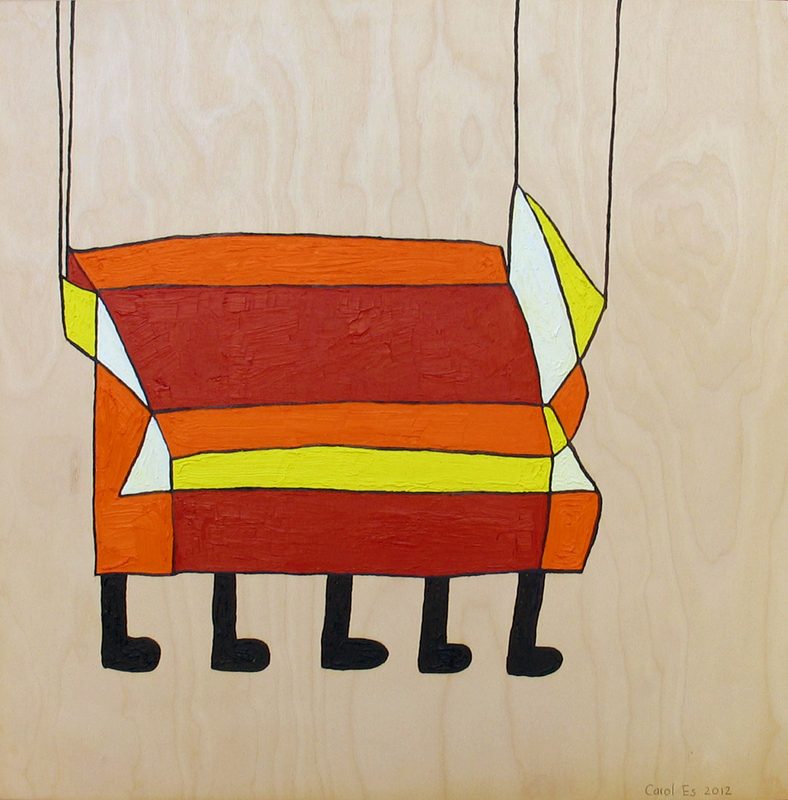
In case it’s not clear yet, I’ve been loving this class. I’ve learned so much, especially because I never knew the timeline of art in terms of who made what and when. This class covers the Renaissance through the Modern movements. I can’t wait for the next class, which covers prehistory.
Today my friend Rochelle Botello is coming out for a studio visit. She is curating the group show I’m in this coming spring at Citrus College. The title of the show is: It’s All Wrong, But It’s Alright and includes Emily Silver, Dakota Noot, Niki Ford, me, Julie Adler, and Veronica DeJesus. It will be the first time I’ll be showing with Niki Ford, with whom I did a few collaborations some years back. We will get to show a couple of those in this show, so I’m excited.
I better get going and at least clean my bathroom.


